Academic Writing Virtual Workshops by Dannelle Stevens
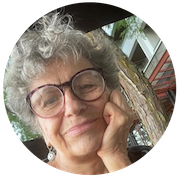 Presenter: Dannelle D. Stevens, Ph. D., is a Professor Emerita from Portland State University who has served as a coach, mentor, and writing buddy for faculty for over twenty years. She has presented at numerous national and international conferences to faculty about boosting their writing productivity and their sense of well-being and confidence about writing. Her most recent book, Write More, Publish More, Stress Less, (2019, Routledge) offers graduate students and faculty numerous tricks of the trade designed to outfox the expectations of the system and become productive academic authors who know what to do when staring at the blank page. As a mentor, she is a great listener and guide through the winding and sometimes seemingly treacherous path toward success in your academic life. Presenter: Dannelle D. Stevens, Ph. D., is a Professor Emerita from Portland State University who has served as a coach, mentor, and writing buddy for faculty for over twenty years. She has presented at numerous national and international conferences to faculty about boosting their writing productivity and their sense of well-being and confidence about writing. Her most recent book, Write More, Publish More, Stress Less, (2019, Routledge) offers graduate students and faculty numerous tricks of the trade designed to outfox the expectations of the system and become productive academic authors who know what to do when staring at the blank page. As a mentor, she is a great listener and guide through the winding and sometimes seemingly treacherous path toward success in your academic life.
You can select from the following virtual workshops:
Her two-hour virtual writing workshops or 60-minute Mini-Workshops are delivered via Zoom includes up to 150 TAA memberships that provide your faculty with access to TAA's extensive writing and publishing resources. These memberships are available to faculty whether or not they participate in the virtual event.
TAA manages event registration, providing you with a registration link to share with your faculty, and workshop participation information in their confirmation emails. E-mail templates are provided to host institutions to promote the event. Institutions must have an expectation of at least 15 participants per workshop or retreat.
Institution Fee: $1,000
To schedule a retreat, please contact [email protected] or Dannelle Stevens: (503) 705-9828 or [email protected]
Leveraging Your Experience: Write More, Publish More, Stress Less
Faculty grapple with trying to squeeze writing and publishing into their already full calendars. Some lack knowledge of, or skills to identify the hidden structures of academic writing that are key to increasing publication acceptance rate. Others face the blank page not knowing where to begin. Most seek to improve in isolation.
This workshop is designed to give participants an opportunity to practice a powerful set of research-based strategies. You will use powerful tools to boost your productivity including text-structure analysis, templates for making an academic argument, and methods for creating small faculty writing groups that can improve your writing accountability as well as your journal article production.
Also included with this workshop is a one-hour consultation with key faculty administrators focused on building a faculty writing community OR a one hour coaching session for workshop attendees.
Demystify the Language of the ‘Academic Tribe’ and Join the Conversation
This workshop will focus on three key strategies designed to translate the “language of the academic tribe”, such as analyzing text structures and using academic writing templates. Insights from these translations lead to establishing a satisfying writing practice and a prolific publication profile.
“Academic writing has its own set of tacit rules and hidden expectations,” said Stevens. “Faculty members are never taught these rules and yet understanding them is essential on the path to publication.”
Participants will learn the habits of successful academic writers, how to analyze the unique language of academic writing, and how to increase productivity and confidence through strategic action.
Two 60-Minute Mini-Workshops Option
(Choose two of the three workshops offered. Event is two hours total.)
Mini Workshop 1:
The “Not-So-Obvious” Infrastructure of Academic Writing: Powerful and Engaging Conceptual Linkages Across Your Text
When I read a journal article, I do not want to wander and wonder where the work is headed. Largely because I am seeking ideas, information and even inspiration, I want to know right away what the scholarly work is about. Scholars can guide readers along a smooth reading road by paying attention to the not-so-obvious infrastructure of typical journal articles and writing their submissions with this structure in mind. Examples of infrastructure include the structuring of the abstract and the connections between the title, the rationale for the paper, and the purpose statement. In this session we will analyze several articles that have a clear infrastructure and, then, practice identifying and refining examples from your own manuscripts.
Mini Workshop 2:
Crafting a Clear and Compelling Purpose Statement in Academic Writing
If you don’t know where you are going, you may end up somewhere else. One way to tell your reader where your manuscript is headed is through a well-crafted purpose statement. At whatever stage of your writing- conceptualization, generating words, or finalizing the manuscript, identifying and refining your purpose statement will actually save you time in the long run. You will have a clearer purpose in collecting your references. For whatever type of manuscript you are working on, this session will include several activities designed to give you hands-on practice developing and strengthening your purpose statement.
Mini Workshop 3:
Keeping a Journal in Your Professional Life: Organization, Reflection, and Writing Inspiration All in One Place
Keeping a journal by hand or on the computer has amazing benefits. A journal in your professional life is less of a diary and much more of an indispensible tool to keep your writing, research and professional commitments organized and in one place. A journal in your professional life is a place to plan and sketch out ideas for future projects. Bring a current or fresh journal along to the session and I will show you some ways to organize it to maximize its value in your professional life.
Blank journals will be available for purchase for $12.
|